
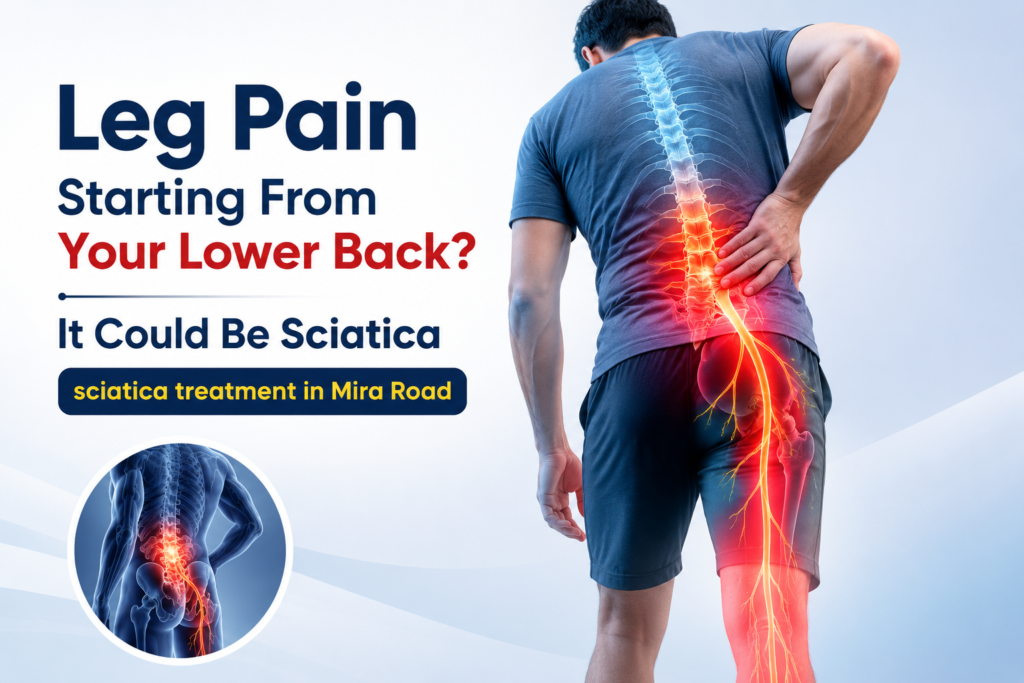
Leg Pain Starting From Your Lower Back? It Could Be Sciatica
Pain that starts in your lower back and travels down your buttock, thigh, or leg can be more than ordinary back pain. In many cases, this pattern may indicate sciatica, a condition caused by irritation or compression of the sciatic nerve. Sciatic nerve pain can feel sharp, burning, shooting, or electric. It may also cause tingling, numbness, or weakness along the affected leg. Understanding the cause early can help you receive appropriate treatment and prevent the problem from affecting your daily activities. What Is Sciatica? Sciatica refers to pain that follows the path of the sciatic nerve, which travels from the lower back through the buttocks and into the legs. It usually affects one side of the body. A problem in the lower spine, such as a herniated disc, bone spur, or narrowing of the spinal canal, can irritate or compress a nerve root that contributes to the sciatic nerve. This is why lower back pain radiating to the leg is an important symptom that should not be ignored, particularly when it persists or becomes progressively worse. What Does Sciatica Pain Feel Like? The symptoms can vary depending on the underlying cause and the degree of nerve irritation. Common sciatica symptoms include: Not everyone experiences severe back pain. Sometimes, leg pain from the lower back can be the most noticeable symptom. Why Does Leg Pain Start From the Lower Back? Several spinal conditions can irritate or compress nerves in the lower back. Common causes include Herniated or Slipped Disc The discs between the spinal bones act as cushions. If a disc bulges or herniates, it can press against a nearby nerve and cause pain that travels into the leg. Spinal Stenosis Spinal stenosis occurs when the spaces around the spinal nerves become narrower. This can put pressure on the nerves and may cause back pain, leg pain, numbness, or difficulty walking. Bone Spurs and Age-Related Changes Changes in the spine that develop with age can sometimes narrow the space available for nerves, leading to irritation or compression. Spondylolisthesis When one vertebra slips forward relative to another, it can contribute to nerve compression and symptoms that resemble sciatica. Can Sciatica Be Treated Without Surgery? Yes. Sciatica treatment without surgery is possible for many patients, depending on the cause and severity of symptoms. Treatment may include: However, treatment should address the underlying cause rather than simply masking the pain. A spine specialist can determine whether conservative treatment is appropriate for your condition. When Might Surgery Be Considered? Most cases do not automatically require surgery. However, surgery may be considered when symptoms are severe, persistent, significantly affecting daily life, or when there is significant nerve compression that does not improve with appropriate non-surgical treatment. Progressive muscle weakness or certain serious neurological symptoms require prompt medical assessment. When Should You See a Spine Surgeon? Don’t ignore persistent lower back pain radiating to the leg, especially if you experience: Sudden loss of bladder or bowel control, numbness around the inner thighs or genital area, or rapidly worsening weakness can indicate a serious spinal emergency and requires urgent medical attention. Finding the Right Sciatica Treatment in Mira Road If you are experiencing persistent leg pain that begins in the lower back, getting the correct diagnosis is an important first step. The right treatment depends on what is causing the nerve irritation, how severe the symptoms are, and whether there is any neurological weakness. Dr. Abhishek Chaturvedi, an experienced Spine Surgeon in Mira Road, can evaluate back and leg pain and recommend an appropriate treatment approach based on the underlying spinal condition. Whether you need conservative care, physiotherapy, further investigation, or surgical treatment, a personalised evaluation can help determine the next step. Don’t Ignore Pain That Travels From Your Back to Your Leg Pain that travels from the lower back into the leg may be your body’s way of signalling nerve irritation. While some cases of sciatica improve with appropriate non-surgical care, persistent or worsening symptoms deserve professional evaluation. If you are looking for Sciatica treatment in Mira Road, consult a qualified spine specialist to understand the cause of your symptoms and explore the most suitable treatment options.
Leg Pain Starting From Your Lower Back? It Could Be Sciatica Read More »


